
 By
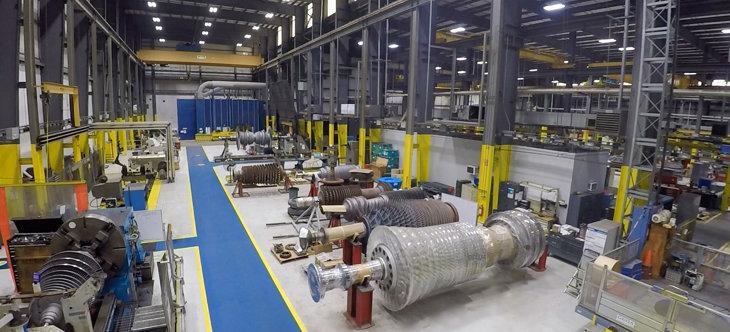
A vital component of numerous power generation facilities is gas turbines. It offers a dependable and efficient power supply that can be brought online when needed. Maintaining that facility calls for a carefully thought-out maintenance schedule. This will allow for the implementation of enhancements while ensuring ongoing dependability, peak performance, and efficiency.
Despite having a very straightforward working concept. The parts that generate the energy are quite specialized and must operate within extremely tight tolerances. A comprehensive set of baseline performance data is supplied by the original equipment manufacturers, or OEMs.
It can be contrasted with the data gathered at every maintenance inspection. To create a serviceability report, variables including output, temperature, pressure, and vibration are compiled and examined.
To make sure that problems can be resolved before they cause serious harm, anomalies in the data that have been gathered can be evaluated and prioritized. This maximizes the asset’s availability and allows repairs to be done during planned stoppage times.
They also give the operator the chance to implement modifications and enhancements. This will guarantee ongoing dependability and preserve or perhaps enhance performance. Engineers for turbine repair services can oversee and implement them.
Components at High Temperatures
Components of GTs are simultaneously dealing with corrosive combustion gases, high temperatures, and high stress levels. For them to operate as efficiently and productively as possible. They must be fired at the greatest temperatures allowed. Combating component deterioration from high temperatures is an ongoing task.
The lifespan of many GT hot-section components is constrained. The typical mechanisms that determine lifespan are oxidation, corrosion, material deterioration, and thermal cracking. Deterioration of a single component detail can result in a limited lifespan.
Experts must accurately identify that detail and provide strategies to extend the component’s lifespan. This can be achieved by a comprehensive analysis and comprehension of the mechanism. Both new designs and old service-exposed components can be improved.
Thermal Imaging
The hot turbine part must be inspected, and a detailed analysis of each turbine blade can identify overheating problems. More visible flaws may be found during initial borescope examinations by a skilled service engineer. But occasionally, a more thorough examination will be necessary.
There is a passive method of using thermographic equipment. This will identify heat accumulation in electrical connections and bearings. This depends on the object’s thermal radiation. On the other hand, active lock-in thermography detects the object’s reaction after introducing energy into it.
For example, a turbine blade—using ultrasonic excitation. A portion of the wave energy is taken in, and heat is produced if the typically homogenous material is damaged. This can be seen using the thermal imaging equipment. This can be carried out during a cycle of component refurbishment.
Cooling is crucial for protecting and prolonging the life of turbine components. It is important to make sure that all of the cooling holes are open. Especially when repairing blades or vanes with cooling channels. With this state, issues can be quickly determined with an infrared camera. And pictures can be taken and included in the official repair report.
With this technology, power failures can be minimized. Read from https://reason.org/commentary/how-to-prevent-another-texas-power-failure/ to learn more.

Repair Technology
The industry has faced several difficulties. This is a result of the complex designs of the cutting-edge technology components utilized in the hot area of third-generation GTs. Such intricate designs could not be repaired using many of the conventional methods.
To return various parts to a safe and usable state. New welding methods, coating materials, inspection processes, and equipment are required. Fuel nozzles, cowl covers, flow sleeves, combustion liners, and transition pieces. These are the parts of the combustion section.
Before restoring the component to its proper proportions, use an advanced weld repair technique. These need to undergo specialized dimensional and non-destructive inspections. Parent metal bonding may be used to fix small cracks and restore wall thickness.
Advances in laser welding technology have made it possible to preserve and reuse many blades. This would have previously been scrapped for the revolving components inside the hot region. Fine details can be rebuilt using laser welding with little extra material. In addition, demanding applications can make use of weld filler alloys that are harder and stronger.
Components can be made more resilient to the extremely high temperatures of the GT. This is achieved by applying thermal barrier coatings, or TBC. They can be used on blades, vanes, transition pieces, and combustion liners. For use on first stage technologically advanced turbine buckets. More sophisticated TBCs that can withstand extremely high temperatures have been created.
Suggested Practices to Improve Repair Quality
- Participate Early in the Procedure
- Create a thorough repair specification by utilizing industry best practices and lessons acquired from prior repairs. So, what happened to power grids, why do they sometimes fail? You can go here for a useful source of info.
- To guarantee precise execution, establish review points at significant moments in the repair process.
- To resolve problems as soon as possible, proactively discuss deviations or non-conformances.
- To make sure the procedure complies with specifications, try to visit the repair center and conduct an in-person audit.
- Include Extensive Quality Checks
- Non-Destructive Testing, or NDT: Verifies the absence of any hidden flaws.
- Material Sample Destructive Testing: Verifies procedures such as coating removal as well as reapplication without compromising essential parts.
- Pressure and Flow Checks: Ensure that the fuel and air systems are not damaged.
- Coating Thickness and Cooling Hole Blockage Analysis Checks: Verify correct coating application and cooling system performance.




Comments