
 By
As global demand for palm oil continues to rise across the food, cosmetics, and biofuel industries, businesses are seeking better ways to secure long-term profits and supply chain resilience. One of the most effective strategies is vertica—owning
A vertically integrated palm oil business not only reduces dependence on third-party suppliers but also improves traceability, quality control, and cost management. However, achieving this requires a thoughtful investment in the right agricultural and industrial equipment at ea
1. Plantation Stage: Equipment for Efficient Oil
Building a successful integrated palm oil business starts at the plantation level. Healthy, high-yielding oil palm trees ensure a steady supply of fresh fruit bunches (FFB), th
Essential
| Equipment | Function |
| Nursery tools & irrigation systems | Su |
| Mech | Acce |
| Tractors & tr | Tra |
| Harvesting equipment (chisel, sickl | Improve |
| Fertilizer spreaders & pest control sprayer | Ensure |
Using modern, mechanized agricultural equipment enhances productivity while reducing long-term labor dependency.
2. Transportation Stage: Getting Fresh Fruit Bunches to the Mill
Once harvested, FFBs must be transported quickly to processing facilities to prevent free fatty acid (FFA) buildup, which reduces oil quality.
Equipment Needed:
Heavy-duty trucks or trailers: For bulk FFB transport
Weighbridges: To monitor input volume and maintain accurate records
Loading cranes or conveyors: To automate the intake process at the mill
Timely delivery and proper handling at this stage ensure the freshness of the fruit and protect the yield quality of the final product.
3. Primary Processing: Core Machinery for Palm Oil Extraction
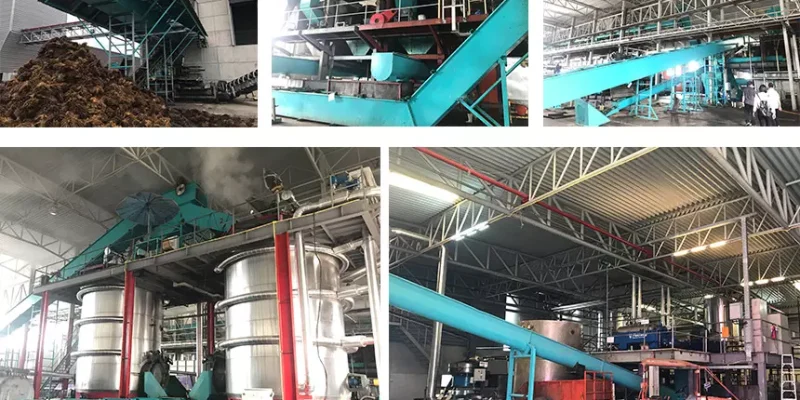
At the heart of the operation lies the palm oil mill. Here, FFBs are sterilized, threshed, mashed, pressed, and clarified to extract crude palm oil. The right processing equipment directly impacts oil yield, quality, and energy efficiency.
Key Equipment from Palm Oil Machinery Manufacturers:
| Equipment | Description |
| Sterilizer | Steam-treats FFB to deactivate enzymes and soften fruit |
| Palm Fruit Thresher | Separates fruits from bunch stalks |
| Digester | Mashes and heats fruits before pressing |
| Screw Press | Extracts oil from digested mash |
| Clarification system | Separates impurities, water, and oil |
| Sludge and kernel recovery systems | Capture palm kernel and reduce waste |
High-quality machinery from reliable palm oil machinery manufacturers ensures durability, efficiency, and minimal downtime. Look for suppliers offering turnkey mill solutions and after-sales support.
4. Kernel Processing: Maximizing Revenue Streams
Palm kernels—leftover after fruit processing—can be used to produce palm kernel oil (PKO), another profitable product.
Required Equipment:
| Equipment | Function |
| Nut cracker and separator | Breaks shells and isolates kernels |
| Kernel dryer | Removes moisture to prevent spoilage |
| Kernel oil expeller | Extracts oil from the dried kernels |
| Filter press | Clarifies PKO for storage and sale |
Investing in these systems helps maximize the value extracted from each harvested bunch.
5. Refining and Packaging: Expanding into Consumer Markets
For vertically integrated businesses targeting export or retail markets, refining and packaging are essential. Crude oils can be refined into edible oils, margarine, shortening, and cosmetics ingredients.
Equipment from Food Processing Equipment Suppliers:
| Equipment | Description |
| Oil refinery units (batch or continuous) | Neutralize, bleach, and deodorize crude oil |
| Filling and packaging lines | Bottles and seals refined oils for retail |
| Labeling machines | Prepares consumer-ready product lines |
| Quality control lab equipment | Ensures products meet local and international standards |
Reliable food processing equipment suppliers offer complete downstream solutions that meet regulatory standards and enhance product appeal.
6. Waste Management and Sustainability Equipment
Environmental compliance and resource efficiency are vital to maintaining a license to operate and building brand trust. Proper waste management also opens opportunities for biomass energy and compost production.
Sustainable Equipment Options:
| Equipment | Function |
| Effluent treatment systems (ETP) | Treat wastewater to meet discharge standards |
| Biomass boilers | Convert palm fiber and shell into steam energy |
| Composting machines | Turn empty fruit bunches into organic fertilizer |
| Methane capture systems | Reduce greenhouse gas emissions and generate power |
Integrated sustainability systems help minimize environmental impact and can turn waste streams into additional profit centers.
Conclusion: Building Value Across the Palm Oil Supply Chain
A fully integrated palm oil business—from planting to processing—offers greater control, higher profit margins, and more resilience against price and supply fluctuations. However, success depends heavily on selecting the right equipment at each stage.
Partnering with trusted palm oil machinery manufacturers ensures that core mill operations are efficient, reliable, and scalable. At the same time, working with experienced food processing equipment suppliers enables businesses to move into refining, packaging, and value-added products that command premium pricing in both local and global markets.
In an increasingly competitive and sustainability-focused market, building a vertically integrated palm oil supply chain is no longer just a strategy—it’s a necessity for long-term success.





Comments